Search

Carrying with Heart – An Overview of the Best Baby and Toddler Carriers

Carrying is love, and with the right baby or toddler carrier, it's child's play.

Carrying with Heart – An Overview of the Best Baby and Toddler Carriers

Carrying is love, and with the right baby or toddler carrier, it's child's play.

Carrying babies and toddlers is much more than just practical – it creates closeness, provides security, and simplifies everyday life. However, not every carrier is suitable for every age or situation. In this article, we'll show you which baby carrier is ideal for each developmental stage and what you should consider when carrying your child.

Baby carriers

The first choice for premature babies & newborns

Especially in their first months of life, babies are particularly sensitive and have a great need for closeness, warmth, and security. A baby wrap is the most traditional and, in this sensitive phase, often the ideal baby carrier. It gently conforms to the body, offers the baby secure support in every position, and strengthens the emotional bond between parents and child.

An elastic baby wrap, such as those from Little Wombat or Moonboon, adapts flexibly to every body shape and creates a particularly protected space for newborns. Snugly wrapped, they hear the familiar heartbeat of mom or dad – a soothing sound that reminds them of their time in the womb and instills deep primal trust.

To ensure the baby is carried safely, it is important to tie the wrap correctly. In the so-called "M" position (spread-squat position), the back should be gently rounded and well supported. For new parents, it's worth investing some time in learning how to tie it – once mastered, the baby wrap quickly becomes an indispensable companion in everyday life.

Especially in their first months of life, babies are particularly sensitive and have a great need for closeness, warmth, and security. A baby wrap is the most traditional and, in this sensitive phase, often the ideal baby carrier. It gently conforms to the body, offers the baby secure support in every position, and strengthens the emotional bond between parents and child.

An elastic baby wrap, such as those from Little Wombat or Moonboon, adapts flexibly to every body shape and creates a particularly protected space for newborns. Snugly wrapped, they hear the familiar heartbeat of mom or dad – a soothing sound that reminds them of their time in the womb and instills deep primal trust.

To ensure the baby is carried safely, it is important to tie the wrap correctly. In the so-called "M" position (spread-squat position), the back should be gently rounded and well supported. For new parents, it's worth investing some time in learning how to tie it – once mastered, the baby wrap quickly becomes an indispensable companion in everyday life.

BABY CARRIERS

The quick & practical carrying solution

For parents who prefer convenience and are hesitant to tie a baby wrap, structured baby carriers with buckles are an ideal alternative – often suitable right from birth. They are easy to put on without assistance. The prerequisites are that the baby weighs at least 3.5 kg and sits correctly in the carrier. These carriers are quick and easy to put on, yet offer ergonomic support and are particularly well-suited for a mobile lifestyle.

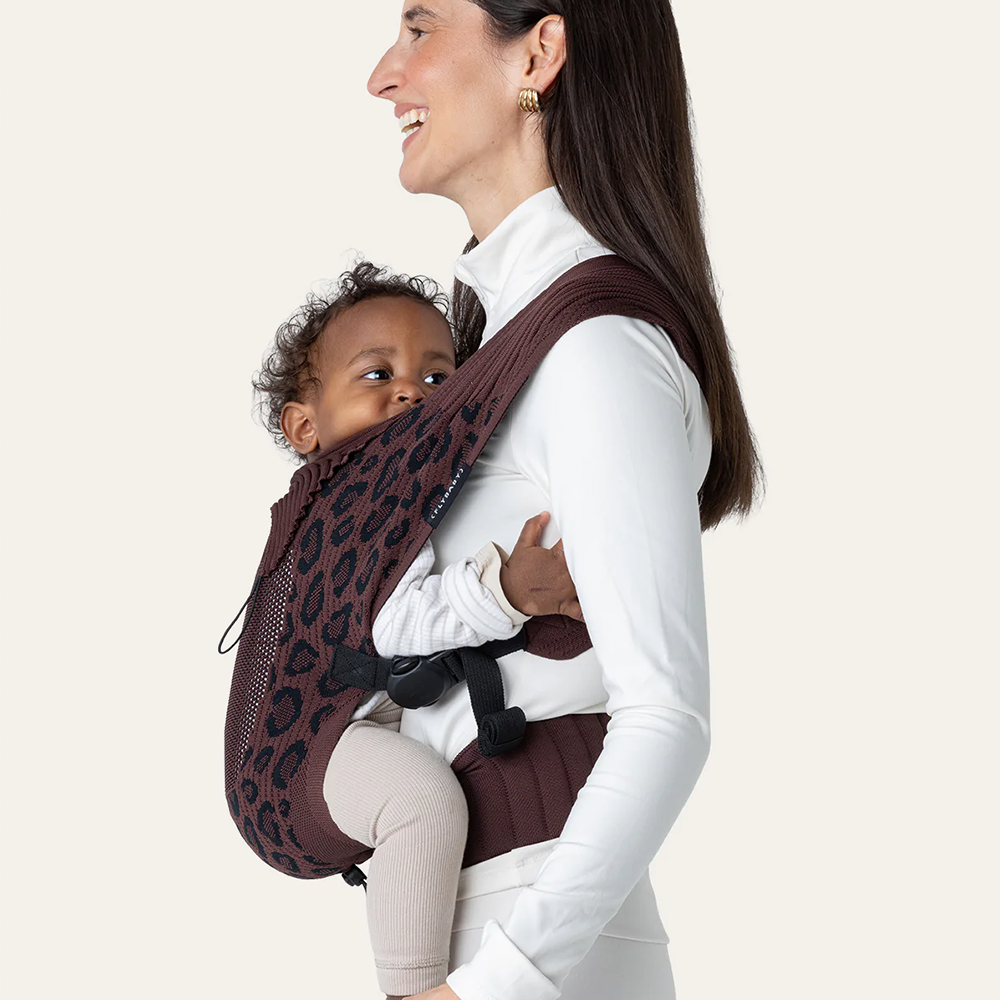
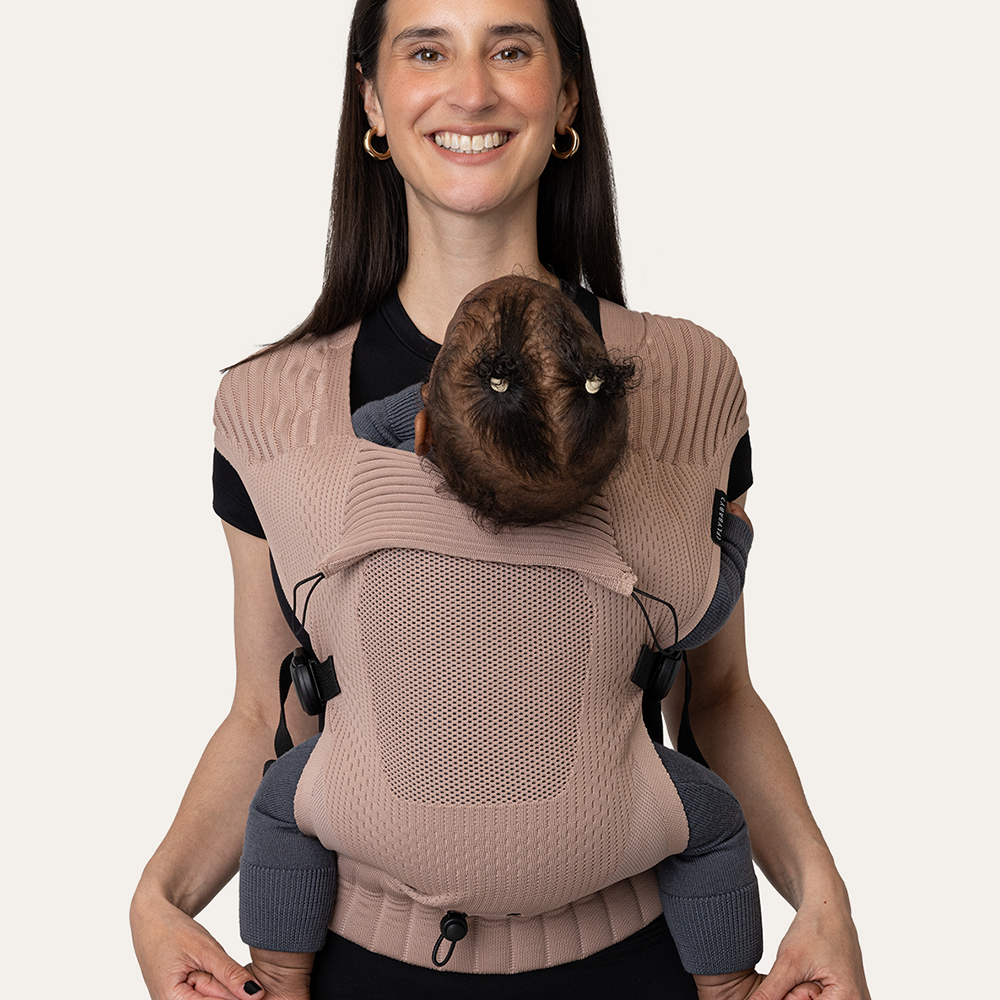
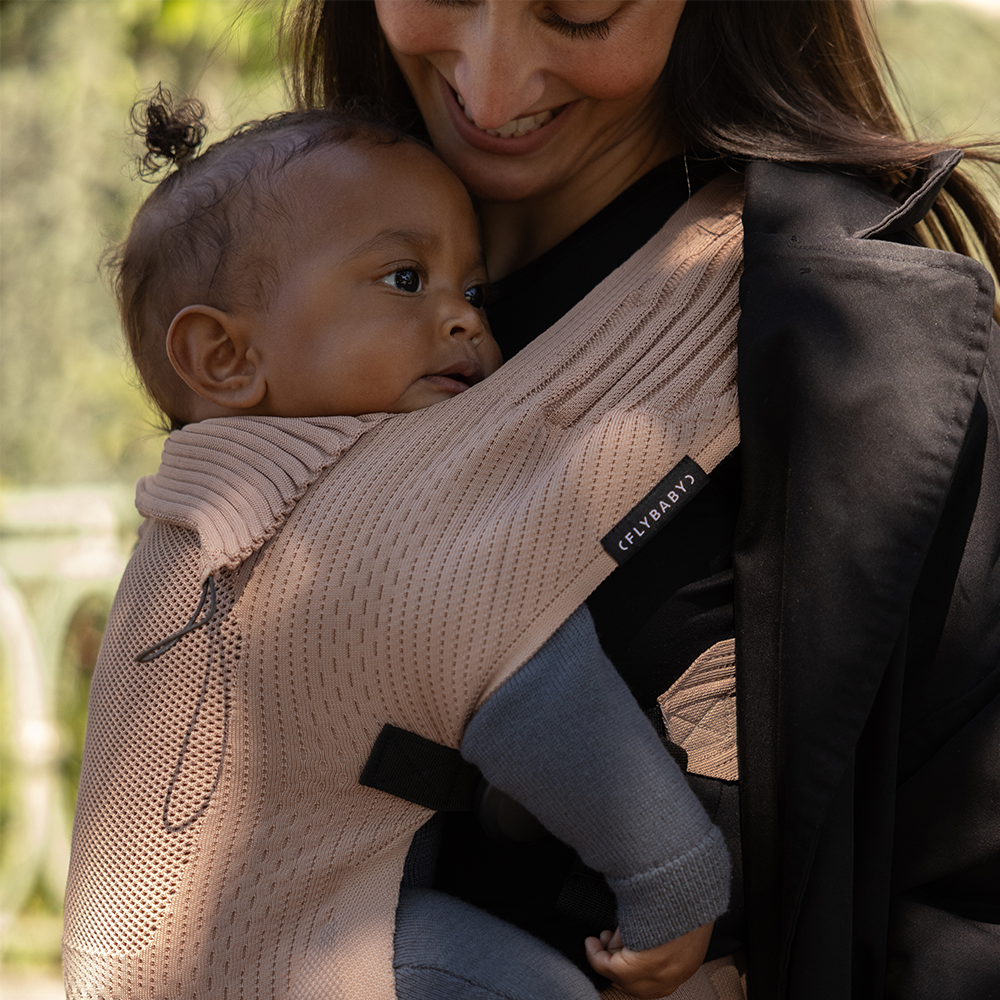
The brand Sandiia combines thoughtful, ergonomic design with stylish fabrics and allows for various carrying positions – usually in front or on the back, depending on the child's age. Flybaby also impresses with a lightweight, breathable carrier made from innovative 3D knit, which is particularly suitable for active parents due to its flexibility.

Important for any baby carrier: the baby should sit in the so-called "M" position (squat-spread position), with slightly bent legs and a well-supported, rounded back. For the wearer, adjustable straps, padded shoulder straps, and balanced weight distribution ensure comfort – even during longer carrying periods.

For parents who prefer convenience and are hesitant to tie a baby wrap, structured baby carriers with buckles are an ideal alternative – often suitable right from birth. They are easy to put on without assistance. The prerequisites are that the baby weighs at least 3.5 kg and sits correctly in the carrier. These carriers are quick and easy to put on, yet offer ergonomic support and are particularly well-suited for a mobile lifestyle.

The brand Sandiia combines thoughtful, ergonomic design with stylish fabrics and allows for various carrying positions – usually in front or on the back, depending on the child's age. Flybaby also impresses with a lightweight, breathable carrier made from innovative 3D knit, which is particularly suitable for active parents due to its flexibility.

Important for any baby carrier: the baby should sit in the so-called "M" position (squat-spread position), with slightly bent legs and a well-supported, rounded back. For the wearer, adjustable straps, padded shoulder straps, and balanced weight distribution ensure comfort – even during longer carrying periods.

Toddler carriers from wildride

The practical, ergonomic solution for tired little explorers

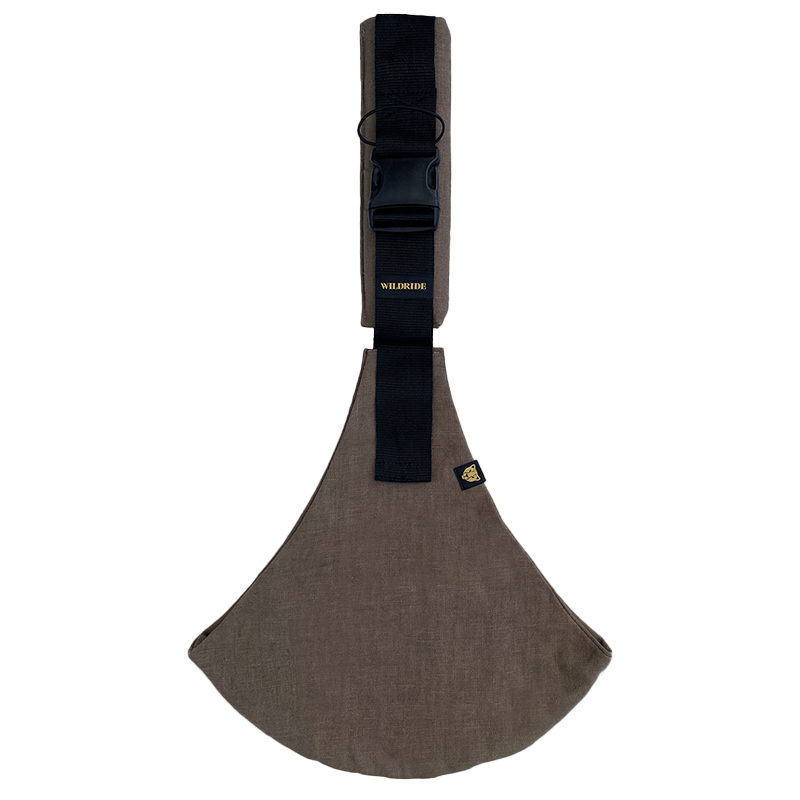
Eventually, a baby turns into a curious toddler who sits upright and can often walk independently, but sometimes gets tired on the go. For this phase – usually from about 9 months to approx. 4 years – the toddler carrier from Wildride is the perfect solution. The carefully designed, side carrier from Wildride is ideal when your toddler suddenly doesn't want to walk anymore.

What's special about Wildride is its hip-carrying approach: unlike classic baby carriers, the child is carried on the hip – very intuitively, as many parents often do anyway. But without major back pain and with support. The padded shoulder, the secure harness system, and the comfortable seat shell allow for quick and ergonomic carrying when it's time again for: 'Mom, Dad, I don't want to walk anymore!'

Especially appealing: The story behind the Wildride brand is a true parental experience. Founder Joost Hultink himself searched for a solution as a father – and developed it together with his team.

Eventually, a baby turns into a curious toddler who sits upright and can often walk independently, but sometimes gets tired on the go. For this phase – usually from about 9 months to approx. 4 years – the toddler carrier from Wildride is the perfect solution. The carefully designed, side carrier from Wildride is ideal when your toddler suddenly doesn't want to walk anymore.

What's special about Wildride is its hip-carrying approach: unlike classic baby carriers, the child is carried on the hip – very intuitively, as many parents often do anyway. But without major back pain and with support. The padded shoulder, the secure harness system, and the comfortable seat shell allow for quick and ergonomic carrying when it's time again for: 'Mom, Dad, I don't want to walk anymore!'

Especially appealing: The story behind the Wildride brand is a true parental experience. Founder Joost Hultink himself searched for a solution as a father – and developed it together with his team.

Interview with Wildride Founder: Joost Hultink

How did you come up with the idea to found Wildride?

My son was already quite heavy at two years old – and had absolutely no desire to be carried in classic front or back carriers anymore. I was looking for a simple solution, but there was nothing that really worked. That's why I always had a strap with me to support him when he wanted to be picked up again. It wasn't particularly comfortable, but better than carrying him entirely in my arms.

At the same time, I saw my business partner Britt carrying her daughter in a bag. Then I thought: What if we combine both? And so the idea was born. The rest is history.

What challenges did you face as a father that inspired you to develop the carrier?

As many parents know: children want to be carried – from infancy well into toddlerhood. They are often tired from walking (if they can even walk yet) and seek closeness and security.

Added to this is the practical aspect: you can't take a stroller everywhere – be it on the beach, through narrow alleys, or when queuing at the supermarket or amusement park. And conventional carriers are often too complicated or cumbersome when you need to be quick.

Do you have any tips for fathers who are still unsure if a carrier is for them?

Absolutely – for fathers, such a carrier is a real must-have! Firstly: it's simply a joy to carry your child. And honestly – no matter how strong you are, a little support never hurts. Without a carrier, carrying quickly becomes uncomfortable: men don't have hips to rest the child on, so everything hangs on their arms. And 15 to 20 kilos quickly become really heavy.

Plus: our carrier simply looks good. You can wear it with pride – even as a stylish dad.

Is there a special moment with your child that you were able to experience thanks to the Wildride carrier?

My daughter is a little model in many of our shoots – so we're often in great locations. But the absolute highlight was the shoot for Harrods – entirely on a yacht. An unforgettable experience!


Interview with Wildride Founder: Joost Hultink

How did you come up with the idea to found Wildride?

My son was already quite heavy at two years old – and had absolutely no desire to be carried in classic front or back carriers anymore. I was looking for a simple solution, but there was nothing that really worked. That's why I always had a strap with me to support him when he wanted to be picked up again. It wasn't particularly comfortable, but better than carrying him entirely in my arms.

At the same time, I saw my business partner Britt carrying her daughter in a bag. Then I thought: What if we combine both? And so the idea was born. The rest is history.

What challenges did you face as a father that inspired you to develop the carrier?

As many parents know: children want to be carried – from infancy well into toddlerhood. They are often tired from walking (if they can even walk yet) and seek closeness and security.

Added to this is the practical aspect: you can't take a stroller everywhere – be it on the beach, through narrow alleys, or when queuing at the supermarket or amusement park. And conventional carriers are often too complicated or cumbersome when you need to be quick.

Do you have any tips for fathers who are still unsure if a carrier is for them?

Absolutely – for fathers, such a carrier is a real must-have! Firstly: it's simply a joy to carry your child. And honestly – no matter how strong you are, a little support never hurts. Without a carrier, carrying quickly becomes uncomfortable: men don't have hips to rest the child on, so everything hangs on their arms. And 15 to 20 kilos quickly become really heavy.

Plus: our carrier simply looks good. You can wear it with pride – even as a stylish dad.

Is there a special moment with your child that you were able to experience thanks to the Wildride carrier?

My daughter is a little model in many of our shoots – so we're often in great locations. But the absolute highlight was the shoot for Harrods – entirely on a yacht. An unforgettable experience!

Who carries – and in which situations?

Carrying is no longer just 'women's business.' Fathers, grandparents, babysitters – anyone who is physically able can and should carry. It is important that the baby carrier fits the body type and is adjusted correctly, and that the baby sits optimally in the carrier and is supported. Especially for longer carrying periods, comfort plays a big role – not only for the child but also for the wearer.

Who carries – and in which situations?

Carrying is no longer just 'women's business.' Fathers, grandparents, babysitters – anyone who is physically able can and should carry. It is important that the baby carrier fits the body type and is adjusted correctly, and that the baby sits optimally in the carrier and is supported. Especially for longer carrying periods, comfort plays a big role – not only for the child but also for the wearer.

Conclusion

The perfect baby carrier depends on your child's age and development – but also on your own needs. While a baby wrap like those from Little Wombat is ideal for newborns & premature babies, baby carriers from Sandiia or Flybaby offer stability for active babies. They are also easier to handle for inexperienced parents. If your already walking and more active toddler wants to be carried occasionally, Wildride offers a stylish, quick, and back-friendly solution for true quality moments.

Conclusion

The perfect baby carrier depends on your child's age and development – but also on your own needs. While a baby wrap like those from Little Wombat is ideal for newborns & premature babies, baby carriers from Sandiia or Flybaby offer stability for active babies. They are also easier to handle for inexperienced parents. If your already walking and more active toddler wants to be carried occasionally, Wildride offers a stylish, quick, and back-friendly solution for true quality moments.

FAQ: Baby & Child Carriers

Once your baby is born, you can carry them in a baby sling or a newborn carrier – provided they are supported correctly. Pay attention to the ergonomic position (squat-spread position) and good head and neck support.

As long as it feels right for you and your child. It's important to take breaks regularly, pay attention to your child's signals, and keep an eye on your own well-being, especially your back. With a well-fitted carrier, even long periods of carrying are no problem.

  • Newborns (0–4 months): Baby wrap or special newborn carriers, e.g., from Little Wombat.
  • Babies (4 months – 12 months): Structured baby carriers such as those from Sandiia or Flybaby.
  • Toddlers (from 9 months – approx. 4 years): Hip carriers like those from Wildride.

Yes – provided the baby is in an ergonomic position with splayed and squatting legs. This position supports healthy hip development and is also recommended by pediatricians.

Wildride is specifically designed for toddlers who can already sit independently and is worn on the hip. This allows for direct eye contact, quick use without extensive preparation, and is particularly practical for on the go – e.g., at the beach, in an amusement park, or when traveling.

Absolutely. All carriers mentioned are unisex and can be individually adjusted. Thanks to adjustable buckles or individually tied wraps, the size can be easily adjusted, allowing both parents to comfortably carry the baby.

Both have their advantages: wraps are more flexible to use and perfect for newborns, especially premature babies who need extra closeness and skin-to-skin contact. Buckle carriers are quicker to put on and offer more stability for heavier, older children. Many parents use both options depending on the situation.

Most carriers and wraps can be hand washed or machine washed on a gentle cycle. It is recommended to carefully follow the care instructions of the respective brand – especially for high-quality fabrics and designs.